

2025 has been a challenging year for brands and consumers.
In today’s “attention economy,” consumers are flooded with irrelevant ads and content. It’s taxing for everyone, but particularly for Gen Z and Gen A—digital natives who expect every online experience to be personalized and frictionless.
At the same time, brands have to contend with a rise in generic-AI-generated content that’s failing to deliver what consumers really want: to feel understood and appreciated in brand relationships in a way that feels human, safe, and personal.
This kind of authentic engagement is imperative for brands that want to acquire and retain loyal audiences. But how do you do this?
That’s the question that’s been burning on our executives’ minds, and one they’ve discussed with many of our customers—some of the world’s most admired brands.
Those conversations, combined with their take on the latest AI, business, and marketing trends, have fueled four predictions and specific actions you can take to implement an omnichannel, customer-centric approach that will drive growth and loyalty in 2026.
1. Discounts Won’t Define Growth—Authentic Value Will
For too long, brands have relied on discounts, flash sales, and short-term offers to drive revenue, which has led to customer relationships that are mostly transactional. In 2026, this approach will become unsustainable. Measurable growth will come from ensuring that genuine relevance and benefits are baked into the customer experience, not bolted onto a transaction.
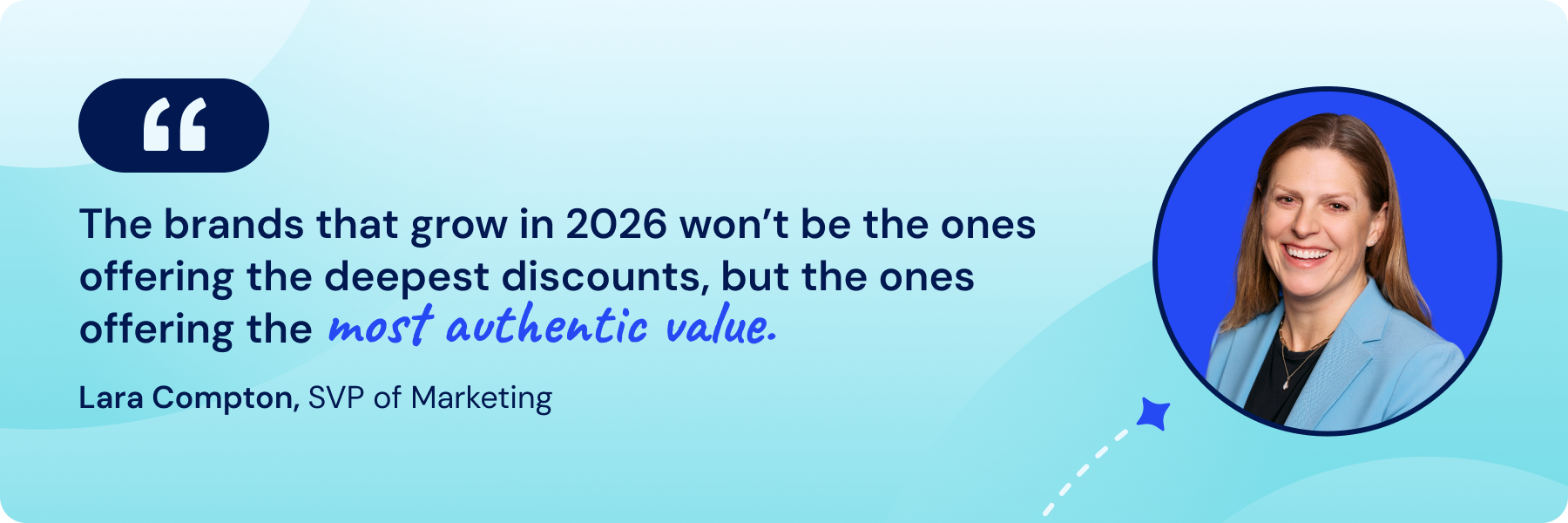
“The brands that grow in 2026 won’t be the ones offering the deepest discounts, but the ones offering the most authentic value,” said Lara Compton, SheerID’s SVP of Marketing. “By building verified audience programs, brands can leverage valuable customer data across the entire business, from creating personalized campaigns that foster belonging and loyalty to influencing how products evolve and where business investments are made.”
Your Move: Shift resources from broad-stroke promotional spend to targeted programs for verified audiences. Providing groups like students, educators, and healthcare workers, with tailored and exclusive experiences that reflect their lifestyles creates data-rich feedback loops that can drive deep personalization and critical product/strategy intelligence.
2. Sustainability and Recommerce Will Be Core to Loyalty
Circular fashion is in. Fast Fashion is out. Consumers want value that’s both tangible and meaningful, and that includes buying from brands that align with their environmental values. And they’re willing to put their money where their mouth is.
According to a recent report 65% of Gen Zs and 63% of Millennials are willing to pay more for environmentally sustainable products or services, and approximately 25% have already conducted research on a company’s environmental impact or policies before buying a product or service from them.
This surge in consumer demand, coupled with regulatory pressure from initiatives like the EU’s Circular Economy Action Plan (CEAP), is forcing retailers to fundamentally redesign their business models to be more sustainable.
Leading retailers are replacing the traditional ‘take-make-dispose’ approach with a strategy focused on repair, rental, and resale to ensure clothing continues their lifecycle. Brands like H&M have integrated buyback programs while some like Nike have recycle initiatives and others like Zara have launched permanent pre-owned platforms.
And sustainability isn’t just a retail play. The furniture company IKEA has a buyback and resell service. And BackMarket, an online marketplace that specializes in selling high-quality refurbished electronics are seeing great success with the student market. They all recognize that loyalty now hinges as much on trust and values as on style or price.
“Sustainability has become a loyalty driver,” said Lara. “The next generation of consumers wants to align with brands that make it easy to buy responsibly, resell easily, and participate in circular commerce. Those brands will earn lasting trust.”
Your Move: Integrate recommerce as a core offering by launching resale, repair, or recycling programs. Shift product development to prioritize longevity, modularity and the use of recycled or bio-based materials. Design products that are easy to repair, disassemble, and recycle, so you can minimize waste, maximize utility, and align with customer values and potential regulatory mandates.
3. Agentic Commerce Will Become the New Gatekeeper to the Consumer
We’re entering a new era of agentic commerce, where AI agents act on behalf of both consumers and businesses. It’s a more dynamic and intelligent shopping ecosystem, but it means that marketers are now communicating with both consumers and bots. As AI agents gain autonomy, they will become the first—and most critical—filter between your brand and the end customer.
Rebecca Grimes, SheerID’s CRO, sees this as a game changer for brand visibility. But she also believes that for agentic commerce to be truly effective, it needs to be fueled by verified insights into the customers engaging it.
“AI shopping agents will start making purchase decisions for consumers, which means brands aren’t selling to people anymore, they’re selling to LLMs,” she said. “To stay visible, brands need verified, permissioned data that agents can use to make accurate decisions and recommendations for consumers.”
And the key isn’t to gather more data, but to gather high quality data and use it to more personally engage your customers.
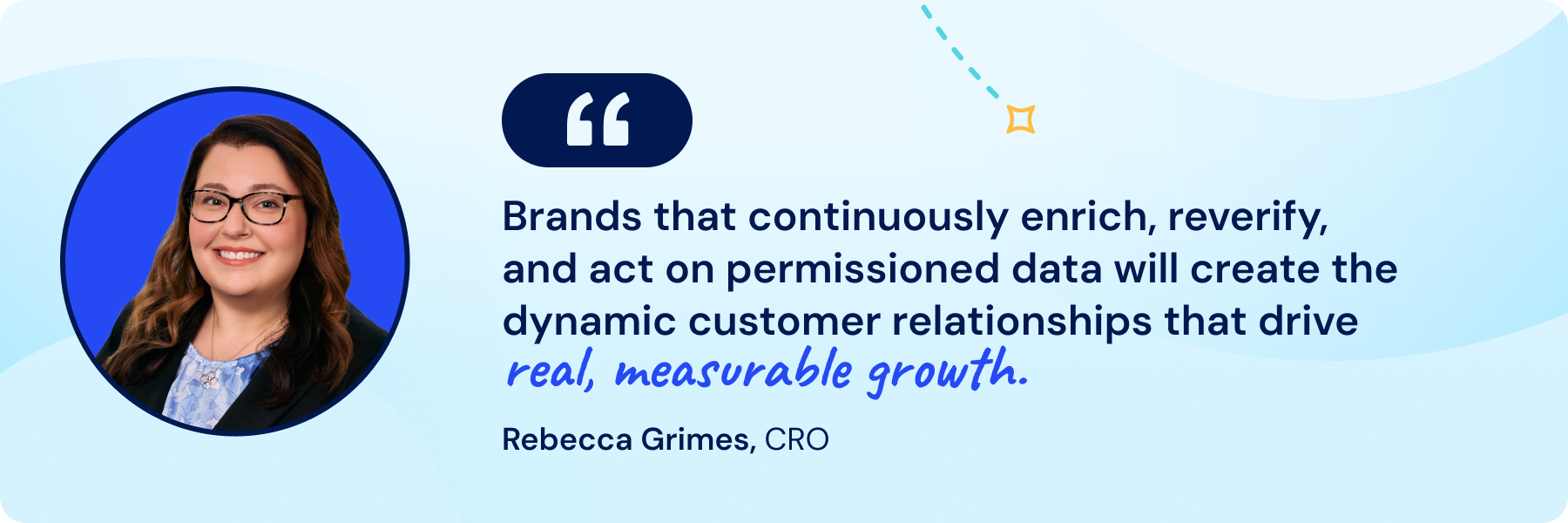
“In 2026, success won’t come from how much data a brand collects, but from how effectively it’s activated,” Rebecca added. “The brands that continuously enrich, reverify, and act on permissioned data will create the dynamic customer relationships that drive real, measurable growth.”
Your Move: Optimize your campaigns for AI agent validation by consistently ensuring they’re based on verified, consumer attributes that reflect the human experience of your customers.
4. Verified Data and Consumer Privacy Are a Growth Advantage
As data and AI become the backbone of marketing, data quality and integrity become paramount.
“AI is now more than a marketing tool, it’s becoming the operating system that drives the entire customer experience. But even the most advanced AI is only as good as the data that powers it,” said Carter Lassy, SheerID’s CPO. “Brands that invest in high-quality, verified information will set the standard for personalization, trust, and performance.”
Consumers will exchange this information for something of value, but only if they feel sharing it is safe. If a company wants to drive performance, it needs to elevate privacy and security to a core strategic function.
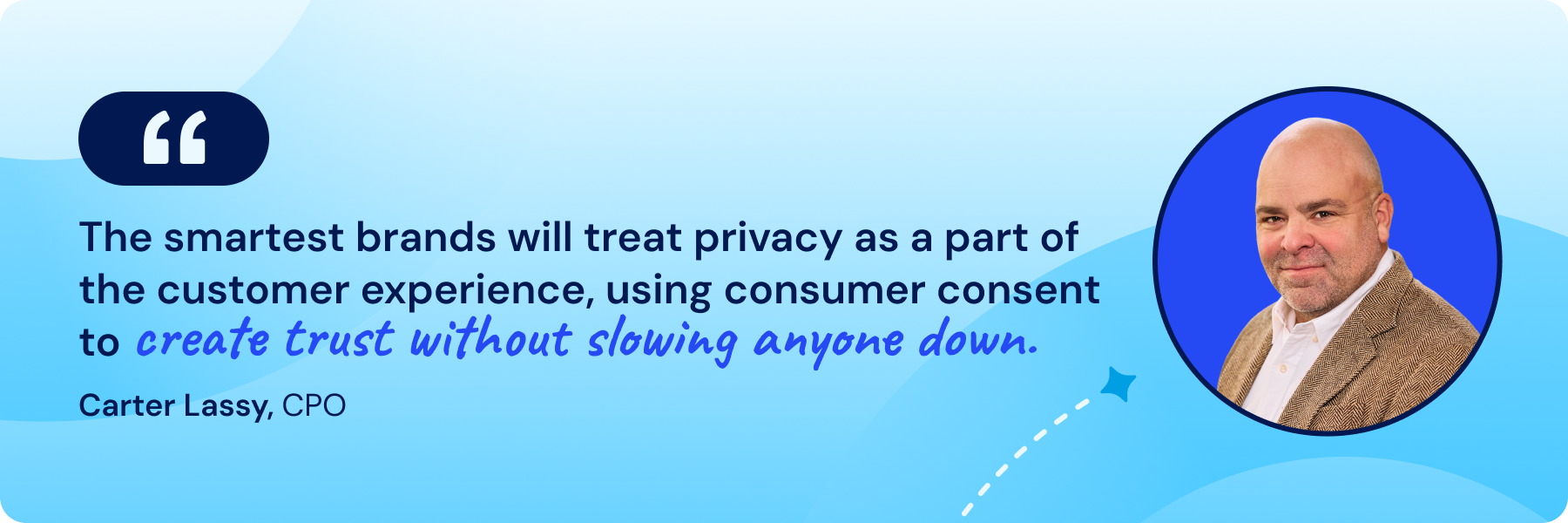
“Privacy is no longer another box to check, it’s becoming a competitive advantage,” said Carter. “The smartest brands will treat privacy as a part of the customer experience, using consumer consent to create trust without slowing anyone down.”
Your Move: Leverage real-time consent and verification to enable moments of value, not friction. View investment in verified, high-quality data—gathered with the consent of your customers—as a strategic growth investment that ensures every personalized action you take builds trust.
Prioritize Consumers First in 2026, and the Revenue Will Follow
Our executive predictions for the new year share one thing in common: seeing your customers as real people must come first—and be secured by high-integrity data.
The key to success in 2026 is to collect permissioned data to understand what makes your customers unique, and then use that insight to:
- Deliver genuine, personalized value
- Develop a brand community that feels inviting and authentic
- Ensure your entire AI-driven operation is grounded in trust, verification, and privacy
Want to create personalized rewards that drive customer acquisition and loyalty? With SheerID’s Audience Data Platform, you can precisely target hundreds of global audiences and collect verified, permissioned data you can stream to 400+ martech platforms for hyper-personalized re-engagement. See pricing designed to fit your business.