






Key article takeaways:
- Prepare now. Brands that start planning in April capture a larger share of the average household spend.
- Avoid generic discounts. Verified, exclusive offers for students and educators deliver better results because they protect your margins and show how much you value these audiences.
- Drive long-term loyalty. Maximize your back-to-school conversions by using the verified, permissioned data you collect to re-engage students and educators with more personalized marketing year-round.
Most consumers don’t start their back-to-school shopping until July, but brands that delay planning their campaigns are already behind.
Smart marketers start early. They know back-to-school is the second biggest retail event of the year. Families with K-12 students spend about $858 per household on back-to-school purchases, and for college kids that number jumps to $1,326 on average (NRF 2025). Months of planning determine whether they show up for your brand or your competitor’s. The brands that start architecting their initiatives now are the ones who will capture the season.
These marketers also know the traditional playbook—wait for summer, launch a back-to-school discount, and hope it drives volume—won’t work because that’s what every brand does.
Today’s shoppers are overwhelmed with promotions across email, social, retail media networks, etc., so they miss your offer because it doesn’t stand out.
And “more” isn’t the answer. Brands that win back-to-school today aren’t offering deeper or broader discounts, they’re entering the season acquisition-ready with relevant and personalized marketing that customers don’t want to miss.
What does acquisition readiness really mean?
Acquisition readiness means knowing who your most valuable audiences are and preparing to engage them with the right technology, tools, and insights before the peak shopping window begins.
Back-to-school spending is not driven by a single audience. It’s multiple groups—students, parents, and educators—each with distinct needs. A college freshman may be searching for technology, apparel, or subscription services; a parent may be buying backpacks for three kids; and educators are all-in on classroom supplies (often out of their own pocket). Leading marketers recognize these differences and respond with special offers and marketing that meets them.
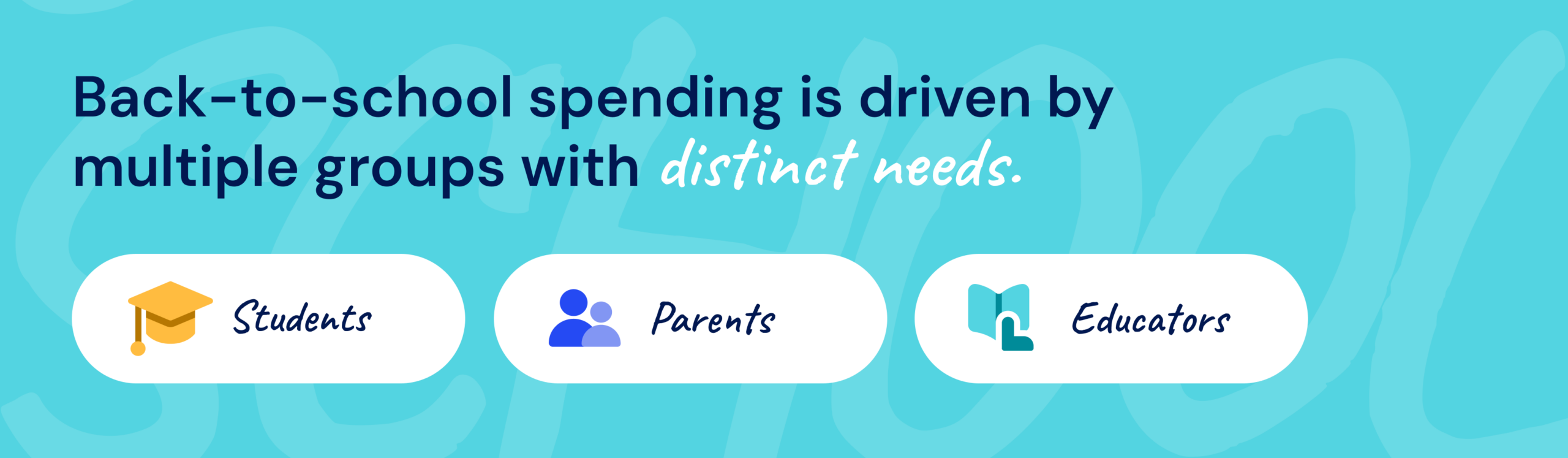
The back-to-school audience isn’t a monolith– it’s a collection of unique communities.
Back Market, a leader in refurbished electronics, is a great example. The company knows Gen Z students are an ideal customer because they value affordability and sustainability, so it launched an omnichannel back-to-school campaign that gave them an exclusive offer, demonstrating they know them. It was a digital-first strategy that leveraged influencers, organic search, and a dedicated landing page. And it was acquisition-ready because in exchange for the offer, students would provide verified, permissioned data that BackMarket could use to nurture their loyalty.
The results were impressive:
- 300,000 verified students in just one year
- A 5x increase in student orders during the back-to-school season year-over-year
- Re-engagement campaigns that leveraged the verified data to drive a student customer lifetime value (CLV) 30% higher than the brand’s global average
Why does personalization beat blanket discounts for back-to-school?
When brands build back-to-school campaigns around a customer’s specific identity, it builds trust and authentic value through demonstrated commitment rather than marketing claims. This builds loyalty connected to who they are, rather than what they spend. These audience-based offers exclusively available to students and educators stand out and are so successful because they:
- Reward identity. Consumers are far more likely to respond to offers that acknowledge them for who they are, whether they are students preparing for a new semester or educators setting up their classrooms. Research backs this– with 71% of consumers being more loyal to brands that make them feel truly seen.
- Have better margins. Instead of offering discounts broadly to anyone who encounters a promotion, brands can deliver incentives to the audiences most likely to convert and remain loyal. One example: The arts and crafts chain, Michaels, verified the eligibility of more than 200,000 seniors, educators, and military members for special offers as part of its loyalty program. Since then, the educators who participated now shop twice as often and spend twice as much as the average customer.
- Reach the right audience. Verifying a back-to-school offer using authoritative data sources ensures that only eligible customers can redeem it, which prevents offer abuse and increases ROI. Brands that use .edu email verification risk giving the offer to countless students who keep their school email address after they graduate. They also leave money on the table. Many eligible students never get a .edu email address.
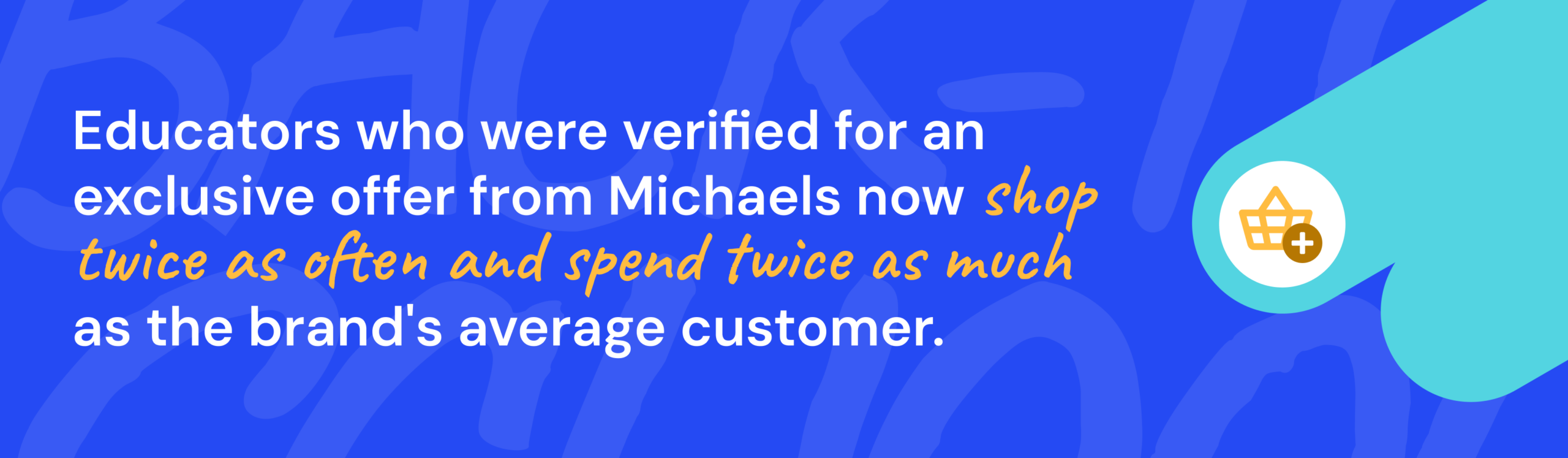
Michaels’ educator offer drove greater loyalty.
Verifying eligibility for an exclusive offer gives brands a long-term benefit—the opportunity to collect consent-based or “permissioned” data that can support more personalized engagement well beyond the back-to-school season. For instance, Codecademy collected permissioned data when they verified their student offer, then used CRM Sync to connect it to the company’s CRM and build automated re-engagement programs. These subsequent campaigns generated open rates greater than 55% and a positive ROI almost immediately because they offered highly personalized customer journeys that required minimal engineering resources.
Turning back-to-school shoppers into lifetime fans
If you want your back-to-school campaign to keep customers coming back in October, January and beyond, you need a solid retention strategy built on data-driven personalization. For example, you can:
- Send a ‘thank you’ email that recognizes their status as a student or educator.
- Give them a special gift as they prepare for final exams.
- Offer them early access to limited-edition tech or clothing bundles.
Doing this builds a strong relationship that will last long after a student graduates or an educator retires.
Grow loyalty by recognizing identity
When your back-to-school campaign is built on a permissioned data framework, you don’t have to guess who your customers are. By recognizing customers for who they truly are—whether they are educators, students, or parents—you can move beyond inferred segmentation and turn a simple transaction into the foundation of genuine trust.
While many brands treat the season as a last-minute scramble to compete on price, the most sophisticated ones are preparing now to compete on relevance. They aren’t just launching a promotion; they are laying the groundwork for a loyalty strategy that will pay off for years to come.
About the author:
Lara Compton is the SVP of Global Marketing at SheerID, where she leads the company’s marketing strategy to drive growth and brand leadership. Lara has decades of experience in scaling B2B SaaS brands, and brings her passion for data-driven marketing and customer-centric storytelling to every role. She specializes in demand generation, brand strategy, and go-to-market execution that fuels customer engagement and business success.
Prior to SheerID, Lara held leadership roles at high-growth technology companies, where she built and led world-class marketing teams. She is committed to innovation, collaboration, and delivering measurable impact in the evolving landscape of digital marketing.