







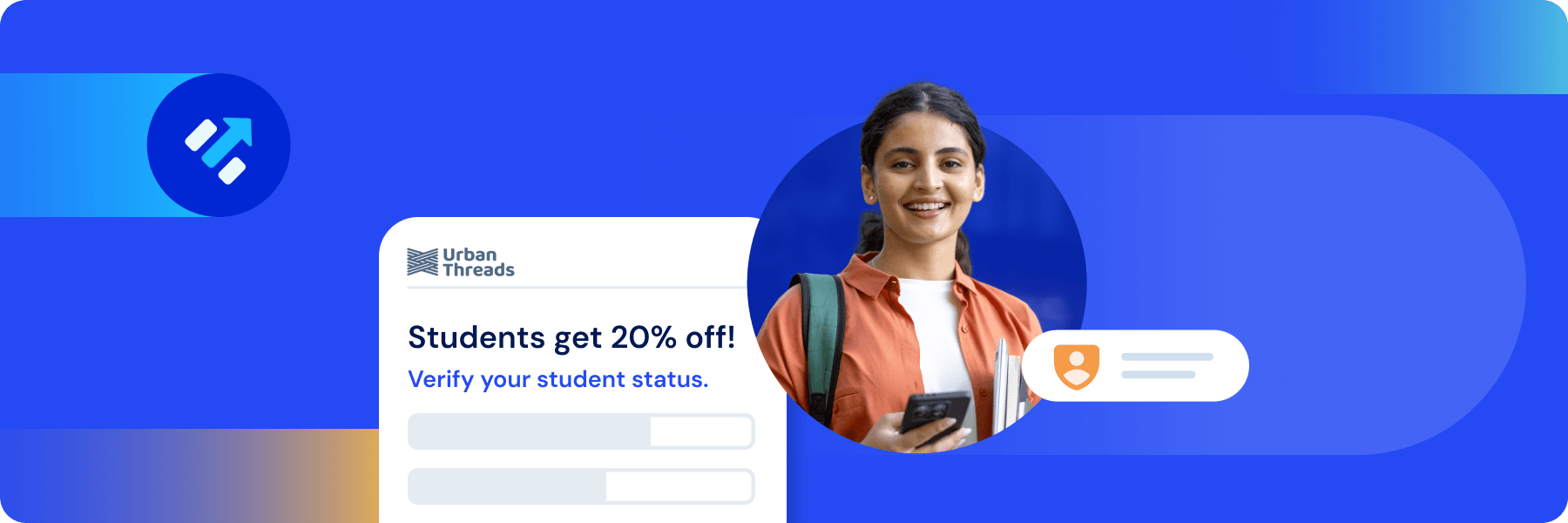
Picture this: a customer spots a special offer from your brand. Maybe they’re a student shopping for a new laptop, an educator picking up classroom supplies, or a military member getting ready for their next home improvement project.
They click to claim their offer. So far, so good.
But then they’re sent to another website, asked to create another account, or prompted to share personal information they weren’t expecting. Suddenly, a simple reward feels a lot more complicated.
So far…not so good. Just like that, a promising customer interaction becomes a missed opportunity.
For brands looking to streamline eligibility verification, the goal shouldn’t be to make eligibility checks faster and easier alone. It’s to create an experience that feels like a natural extension of your brand—and opens the door to a longer, more meaningful customer relationship.
Key takeaways
- Customers prefer to stay on-brand. 67% of consumers prefer to verify eligibility directly on a brand’s website or app.
- Less friction means a better experience. Streamline eligibility verification by avoiding unnecessary redirects, additional accounts, and unexpected requests for personal information.
- Make the reward worth the effort. Clearly communicate the benefit, ask only for the information you need, and make it easy for eligible customers to claim their special offers.
- Think beyond the first purchase. Permissioned customer data helps brands turn verification into an opportunity for ongoing recognition and lasting loyalty.
Today’s customers prefer on-brand verification
When someone discovers a special offer from your brand, there’s a good chance they’d prefer to claim it there, too.
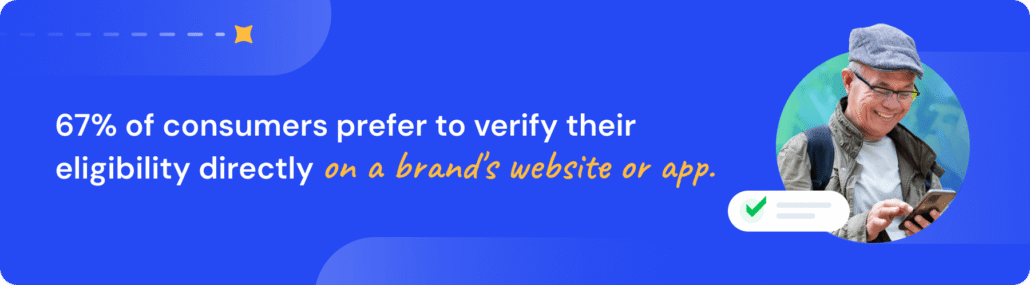
According to our latest consumer research, which surveyed more than 2,000 consumers across North America and EMEA, 67% prefer to verify their eligibility directly on a brand’s website or app. Just 11% prefer being redirected to a third-party site.
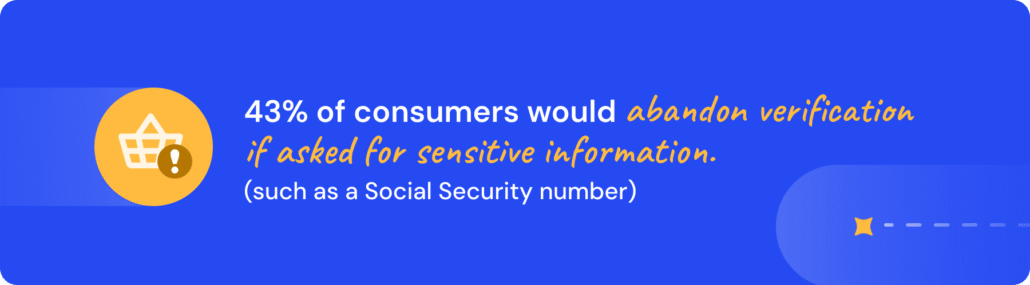
And the information customers are asked to share matters, too. In the same survey, 43% of consumers said they would abandon verification if asked for sensitive personal information, such as their Social Security number or a government-issued ID.
It’s a reminder that even a small interruption can change how customers feel about an otherwise positive experience.
Think about it from their perspective. They’ve already chosen your brand. They’ve found an offer that speaks to them. They’re ready to take the next step. Why make that step feel like starting over?
What verification friction costs you
Every additional step in the customer journey creates another opportunity for something to go wrong.
An unexpected redirect or unfamiliar login screen can make shoppers hesitate. Worse, it can make them question whether the reward is worth the trouble.
And while speed matters, reducing verification friction isn’t simply about eliminating clicks. It’s about making customers feel comfortable, informed, and confident throughout the experience.
Our research found that:
- 38% would abandon the process if asked for more information than they expected.
- 32% would walk away if the benefit didn’t feel worth the effort.
- 13% of consumers said they would abandon verification entirely if redirected to another company’s website or app.
In other words, customers aren’t unwilling to verify. They just want the experience to make sense. This is also where the verification model matters.
Affiliate marketing plays an important role in helping brands reach new audiences and drive offer discovery. But introducing customers to a brand is only the first step. The next opportunity is turning that initial interest into a lasting relationship.
That’s where seamless verification comes in. By keeping the experience on-brand, companies can recognize eligible customers, collect permissioned data, and make it easier for shoppers to claim their special offers.
Together, affiliate marketing and brand-first verification can help turn a single transaction into something more meaningful: an ongoing relationship built on recognition, trust, and loyalty.
How to streamline eligibility verification
What does a better verification experience actually look like?
Fortunately, you don’t have to reinvent their entire customer journey to make meaningful improvements. These five practices can help reduce verification drop-off while laying the groundwork for stronger customer relationships.
1. Keep eligibility verification on your website or app
Your customers shouldn’t have to wonder whether they’ve left your website to claim an offer. An embedded verification experience lets shoppers confirm their eligibility within your existing website or app, with familiar branding and a consistent interface.
By eliminating unnecessary handoffs, brands can create a smoother path from offer discovery to redemption. And with 67% of consumers preferring on-brand verification, it’s an experience that aligns with what most shoppers say they want.
2. Make the reward clear from the start
Before asking customers to share information, tell them exactly what they’re getting in return. Is it a special offer on today’s purchase? Exclusive access to a product or service? Spell it out.
In our research, 57% of consumers said knowing the exact benefit was important when deciding whether to verify.
That makes the offer itself a critical part of offer verification. When customers understand the reward upfront, they’re better equipped to decide whether participating is worthwhile.
3. Ask for what you need, and explain why
Nobody likes filling out a form that asks for more information than seems necessary. When verifying eligibility for an offer, request only the information needed for the eligibility verification process and clearly explain how it will be used.
For example, confirming someone’s status as a student or educator is different from asking them to establish a comprehensive identity profile.
A streamlined process can use authoritative data sources to confirm eligibility, with additional documentation requested when necessary. Just as important, customers should understand what happens to their information afterward. Transparency is part of the value exchange, not something to address in the fine print.
4. Don’t make customers create another account
Your customers may already have an account with your brand, especially if they’re participating in an existing loyalty program.
Requiring a separate provider-managed account to access a special offer can introduce another step they weren’t expecting. Seamless, real-time eligibility verification allows brands to confirm eligibility without requiring an additional third-party login.
Better yet, when verification is integrated with an existing customer account, eligible offers can become part of the brand experience customers already know.
5. Make it easy to enjoy the benefits
Verification shouldn’t feel like a chore customers have to repeat every time they want to use a reward.
When appropriate, linking verified eligibility to an existing loyalty account can make benefits easier to access across future transactions and shopping channels. Brands can still perform eligibility rechecks according to their program requirements while reducing repetitive steps for customers. The goal is simple: Make recognition feel less like paperwork and more like a perk.
Customer verification isn’t the finish line, it’s the starting point
A seamless verification experience helps customers claim an offer. But what happens next is where the real opportunity begins.
With a consumer’s permission, the verified data collected during eligibility confirmation can become part of the brand’s own customer record, enabling more relevant, personalized experiences. And that data belongs in the brand’s hands.
With SheerID, brands control the permissioned customer data collected on their behalf, while SheerID processes the information needed to verify eligibility. Instead of treating verification as a one-time transaction, brands can use those insights to build an ongoing relationship.
A student who verifies for an offer today might become a loyal customer throughout college and beyond. A healthcare professional might receive relevant rewards that recognize the work they do. A military member might see their verified benefit reflected in their existing loyalty account.
It’s a shift from simply offering a discount to recognizing the person receiving it. And consumers are telling brands that recognition matters.
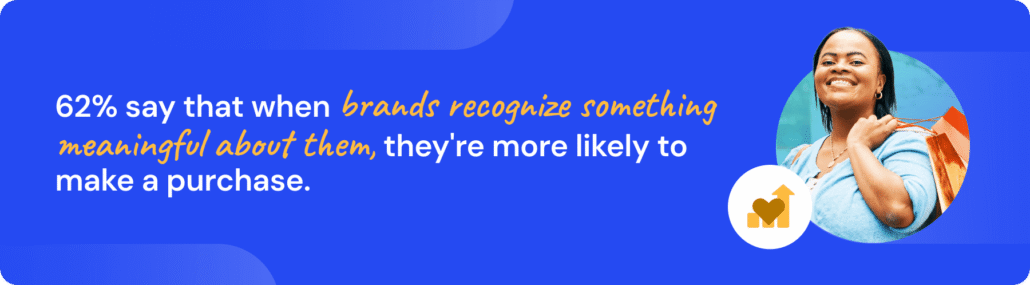
Our research found that when brands recognize something meaningful about their customers, such as their profession or life stage:
- 62% say they’re more likely to make a purchase.
- 62% say they’re more likely to choose that brand again.
- 56% say they’re more likely to purchase more frequently.
These findings reflect consumers’ stated purchase intentions, but they make a compelling case for looking beyond the initial redemption. Recognition shouldn’t end when verification is complete. It should become part of how brands engage customers throughout their lifecycle.
How J.Crew put seamless verification into practice
For a real-world example, look at J.Crew. They wanted to make its offers for students, educators, military members, medical professionals, and first responders easier to access across its shopping channels.
Rather than requiring repeated verifications and promo codes, J.Crew integrated SheerID’s verification capabilities into its loyalty program. Once verified, eligible customers could access their special offers directly through their loyalty accounts, with benefits available online and in stores.
The results included a 35% increase in verified customers, an approximately $10 lift in average order value, and a 38% increase in overall program demand. It’s an example of how verification can do more than confirm eligibility. When connected to the broader customer experience, it helps brands make rewards easier to use and more valuable over time.
Read the J.Crew customer story
Make verification part of your loyalty strategy
A special offer is a great way to get someone’s attention. But keeping that attention takes more than a discount. It takes a customer experience that feels easy, trustworthy, and personal from the moment someone discovers an offer to every interaction that follows.
For brands looking to streamline eligibility verification, that means going beyond speed and convenience. It means reducing unnecessary friction, respecting consumer privacy, and making verified recognition part of a larger loyalty strategy.
Because the goal isn’t just to get someone verified. It’s to give them a reason to keep coming back.
Give your customers a better way to verify
See how SheerID helps brands keep verification in-house, protect permissioned customer data, and build stronger verification and loyalty.
Frequently asked questions
What is eligibility verification?
Eligibility verification confirms whether a customer qualifies for a special offer based on attributes such as their profession, student status, or military affiliation. It helps brands recognize specific customer communities, protect special offers, and give eligible shoppers access to benefits that acknowledge who they are.
How can brands streamline eligibility verification?
Brands can streamline eligibility verification by keeping the process on their website or app, requesting only necessary information, and clearly communicating the reward. Eliminating unnecessary redirects and third-party account creation can also reduce verification friction, creating a smoother experience from offer discovery to redemption.
What causes eligibility verification drop-off?
Unexpected redirects, additional account requirements, and requests for sensitive personal information can all contribute to eligibility verification drop-off. Our consumer research found that 43% of consumers said they would abandon verification if asked for sensitive information, such as their Social Security number or a government-issued ID.
How does seamless customer verification support long-term loyalty?
Seamless customer verification makes it easier for shoppers to access special offers while helping brands build direct relationships. With customers’ permission, verified data can support more personalized engagement, allowing brands to recognize people for who they are and deliver relevant experiences long after their first purchase.