








With 19.4 million students enrolled in US schools and 560+ billion in spending power, marketing to college students is a massive opportunity.. Successful brands are ditching old playbooks for marketing strategies rooted in social video, creator trust, and verified rewards.
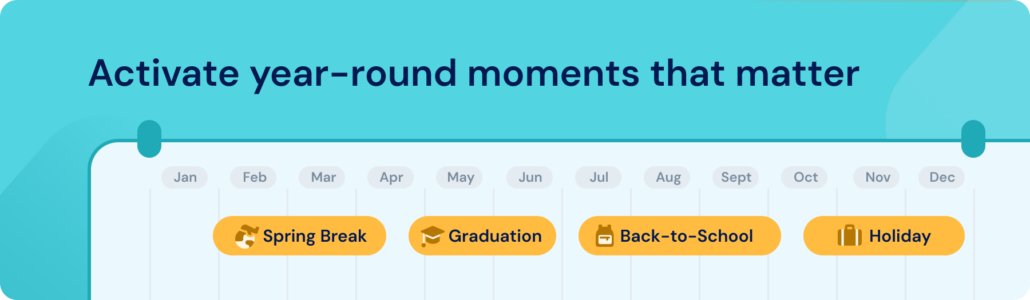
And the strongest student marketing strategies are twofold. They combine an always-on foundation with strategic campaigns around high-intent moments, like back-to-school, spring break, holidays, and graduation. After all, students are spending on tech, travel, food, and so much more throughout the year. Let’s get into it.
Key Takeaways
- Build Trust: Gen Z college students are skeptical of ads. They want brand exchanges that are authentic and respect their data privacy.
- Market on social media. Students use TikTok and Instagram as search engines to find new products.
- Develop creator-led content: Recommendations from creators are 3 times more effective than traditional ads.
- Verify offer eligibility. Using audience verification to ensure exclusive offer integrity and collect permissioned data to drive lifelong loyalty.
Marketing to College Students: From First Purchase to Long-Term Loyalty
Marketing to college students is a specialized approach to finding new customers that focuses on the exact lifestage and habits of post-secondary learners. Back-to-college spending for 2025 reached $88.8 billion in the US, and families with college students planned to spend an average of $1,325.85 per student. The most effective marketing to college students focuses on their habits and lifestage and uses social media, creators, and exclusive offers to reach them.
A good student program is also specifically tailored to students. The goal isn’t just a quick conversion. It is about getting a student to pick your brand for the first time, and then using their permissioned data to create personalized marketing that drives long-term customer loyalty.
Why Does Marketing to College Students Matter in 2026?
College is the first time most people have their own money to spend. Getting students to like your brand when they’re in college pays off for a long time.
Here are some important facts:
- Huge spending. College students’ estimated global spending power is $1.2 trillion. Gen Z’s global spending power is expected to grow to $12 trillion by 2030.
- Long-term value. Two-thirds of Gen Z say they’ll stick with brands they like for years.
- Exclusive offers. Eighty-six percent of Gen Z college students would be more likely to buy from a brand that gave them a student offer.
When you give a student a special offer, they spread the word. Ninety-seven percent of Gen Z college students would share an exclusive offer with other students. This creates a flywheel effect where one customer brings you many more at a low cost.
Who Are Today’s College Students?
There are about 19.4 million students in the US right now. The group is diverse and changing.
- Undergrads and grads. There are 16.2 million undergraduate students. Marketing to graduate students is also key, with 3.2 million people in these programs.
- Older learners. About 16% of students are age 30 or older. This group is growing fast.
- International students. Marketing to international students is a great way to grow your business. Nearly 1.2 million international students in the US contribute $42.9 billion to the economy.
Fully digital. Gen Z college students spend 6.9 hours a day looking at media on their phones, per Deloitte.
How Do College Students Shop?
Students move fluidly between apps and stores, but their shopping starts on digital platforms.
Social Media is the New Search Engine
Gen Z college students use apps to find products and decide if they’re worth buying. Nearly 90% use Instagram and 82% use TikTok. And 90% of Gen Z say social content influenced a purchase in the last six months.
Creators Beat Paid Ads
Nearly 70% of Gen Z consumers said they buy at least one product every month based on creator recommendations.
Physical Stores are Back
While nearly half of college students start their back-to-school shopping online, many wind up going to brick and mortar locations to make a purchase. In 2025, 37% of Gen Z shoppers planned to visit a physical store.
Financial Pressure
Many students are selective with how they use their money. According to PwC’s Holiday Outlook survey, 82% of Gen Z consumers are seeking out dupes (less expensive alternatives to high-end products).
What Should Brands Know Before Marketing to College Students?
- Privacy. Students don’t like sharing too much data. Use permissioned data where they give you info in exchange for an exclusive offer.
- Eligibility. Confirming a customer’s student status will ensure your offer remains exclusive and protect your margins.
- Authenticity. Students care about the environment and social issues. They want to see proof that your brand is doing good.
12 College Marketing Strategies That Work
To see results, try these twelve college marketing strategies:
- Map out distinct segments. A freshman is different from a grad student. Use data to engage each group with more relevant offers.
- Use the right platforms. Focus on Instagram, YouTube, and TikTok.
- Use creators and ambassadors. People trust peers. Comcast’s Xfinity Student program used campus ambassadors to drive a 91% increase in conversions.
- Meet them on chat and text. Students prefer SMS or chatbots over phone calls.
- Go international. Expand your campaigns to engage students globally.
- Lead with values. Show students your brand cares about the same issues they do.
- Run student contests. Let only verified students enter to keep the prizes exclusive.
- Market to parents. Parents pay for a lot of dorm essentials and back-to-college supplies.
- Layer key moments on an always-on foundation. Acquisition becomes a year-round opportunity; always-on offers spike engagement.
- Launch an always-on verified student offer. Give students a reason to choose your brand during every season, semester, and special or personalized moment.
- Leverage word-of-mouth. Ninety-seven percent of Gen Z college students would share a student offer with other students.
- Remarket with data. Use the permissioned data you collect from a verified, student offer to create a lifecycle marketing program that nurtures their loyalty after they graduate.
Build a Student Strategy That Drives More Growth
Why Give College Students a Verified, Exclusive Offer?
Giving an exclusive offer to students is about more than just converting them with a lower price. It is an audience marketing strategy that shows you recognize who they are and the lifestage they’re in. It’s a highly effective way to engage students because it makes them feel seen and valued, which creates an emotional connection that makes your brand stand out.
When you verify a student’s eligibility for your offer, you collect permissioned data that you can stream directly into your martech stack. You can combine this data with transactional and behavioral data to get a full view of the student’s interests, wants, and needs. With this insight, you can create personalized marketing that nurtures their loyalty through college and beyond and maximize their customer lifetime value.

How to Verify College Students for an Exclusive Offer
Using audience verification to verify students protects your offer from being redeemed by ineligible customers. The best way to do this is to use offer verification software that:
- Instantly verifies students on your website as a seamless step within your purchase process
- Uses authoritative data sources to confirm their student status
- Gives you full ownership of the student’s verified data so you can use it to nurture their loyalty
On-site verification is a frictionless, privacy friendly process that drives conversions. It occurs in three steps:
- A student enters basic information into a form, like their name, email address, and school.
- The platform instantly verifies them using official school records
- The offer is immediately applied to their purchase and they finish checking out.
This method is much more secure than using .edu email addresses, which many students keep long after they leave school. It also avoids sending students away from your website to create an account with a third-party, which creates friction and can lead to cart abandonment.
How are Brands Benefiting from Marketing to College Students?
- Comcast increased student subscriptions by 6x and conversions by 91%.
- Unity Technology increased student conversions by 50%.
- You Need a Budget (YNAB) increased student acquisition by 68% and slashed support costs by $20,000.
- BackMarket generated a student CLV that’s 30% higher than its global average.
Winning the Future with College Students
Marketing to college students is one of the smartest moves a brand can make. By using the right college marketing strategies—like running high-impact campaigns over an always-on foundation and using verified, exclusive offers to build a lifecycle marketing strategy—you can turn one student transaction into a brand advocate for life.
Turn student demand into year-round growth. Learn how to build an always-on student acquisition foundation with layered strategic pulses in our year-round growth blueprint for student audiences.
Frequently Asked Questions
How many college students are there in the U.S.?
As of 2025, there are about 19.4 million students . This includes 16.2 million undergraduates and 3.2 million graduate students.
How much do college students spend?
College students’ estimated global spending power is $1.2 trillion. Gen Z’s global spending power is expected to grow to $12 trillion by 2030. On average, families with college students spend $1,325 per student.
What social media platforms do college students most use?
What drives college student brand loyalty?
Exclusive offers drive student brand loyalty. Research shows that 40% of Gen Z college students would switch their loyalty to a competing brand if it gave them a student offer. Nearly 75% of Gen Z college students said they would be more likely to join a brand’s loyalty program to receive an exclusive offer.
What’s the best way to reach college students with an offer?
- Create an appealing offer and use messaging that resonates with them.
- Time it with key events, like back-to-school, spring break, and final exams.
- Promote it with creator-led content and ambassador channels on Instagram, TikTok, and YouTube.
- Verify their eligibility with an audience data platform.
How do I verify that someone is actually a college student?
Use a verification platform that checks official school data instantly and gives you their verified data to re-engage them.
Do students share brand offers with friends?
Yes! Ninety-seven percent of Gen Z college students would share an exclusive offer with other students.
What’s the difference between marketing to college students and marketing to Gen Z?
Most college students are Gen Z, but many aren’t. Sixteen percent of college students are 30 or older. And Gen Z also includes younger teens and people who don’t attend college.
Marketing to college students focuses specifically on the college lifestyle and calendar.
Should I create a student program if my average customer is older?
Yes. It is a low-cost way to get young customers who will stay with you as they grow older and earn more.
How long does a student verification take?
With an on-site verification platform, most students are verified in seconds, directly on the brand’s site.
Should student marketing be year-round or seasonal?
Both. An always-on student offer creates a continuous path to acquire students throughout the year, while strategic campaigns around high-value moments like back-to-school, spring break, graduation, and holiday can amplify demand. The strongest programs combine an evergreen foundation with strategic promotional pulses.
Ready to build your program?
Brands like ASICS and J.Crew use SheerID to find real students and turn them into lifelong fans.
Request a demo to see how it can work for you.
Related Resources